
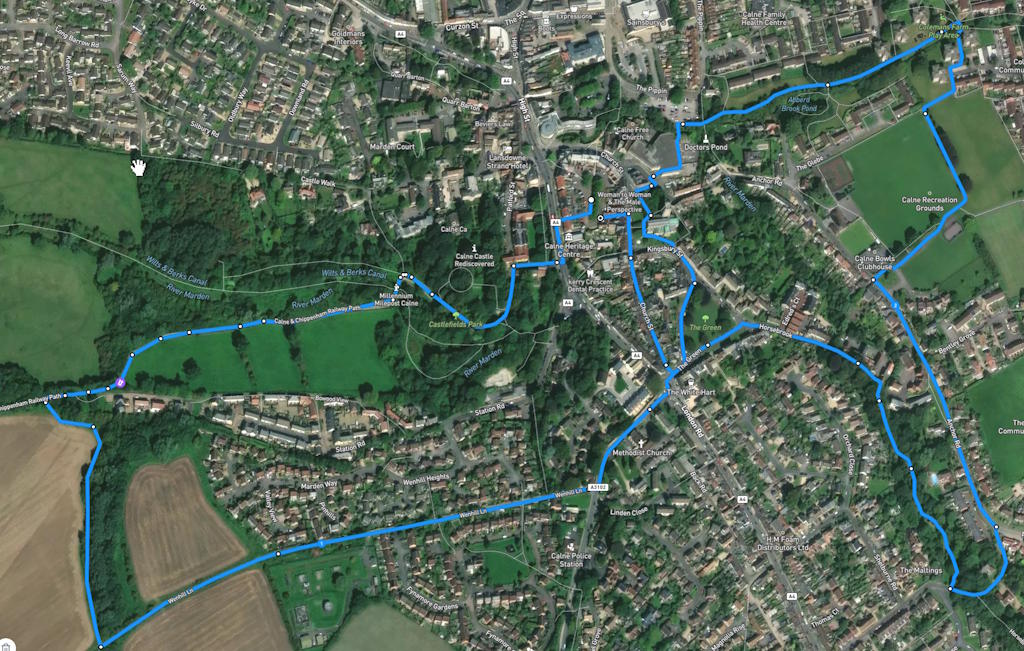
A 3.5-mile easy circular walk around Calne. Click map below to enlarge. Click here for an aerial view. Click here for a downloadable PDF guide of this page. (There is a GPX route option here for phone/tablet download – some browsers need “save as”. But only follow this link after watching this GPX help video). Friendly warning: all files relating to walks are published here in good faith but on the understanding that users must be responsible for their own safety and wellbeing..
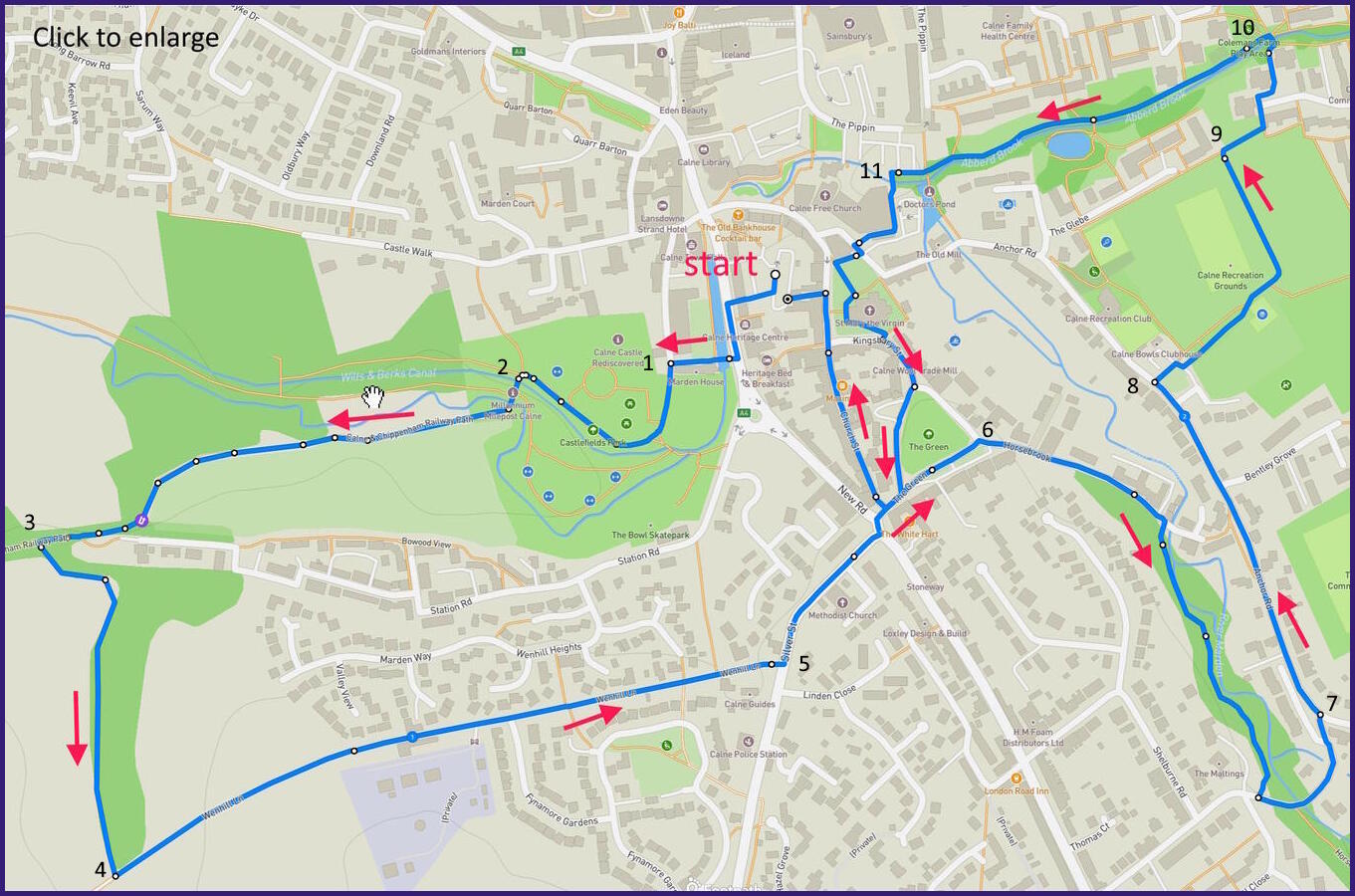
Start: Leave car park onto main road, turn left and cross water. Walk towards path gates 160m
1: Follow path on curve until small bridge crossing water. 270m
2: Cross water and take right path until gate into field on left (slightly beyond path mark on map) 500m
3: Walk around edge of field 360m
4: Exit field by gate and turn left onto lane. Walk forward 680 m
5: Turn left on main road. Cross at traffic intersection and enter The Green. Walk to far corner 300m
6: Walk down hill on road until entrance to footpath entry on right (by iron railings over river). Follow path through trees until meet road 280m
7: Walk straight until playing fields on your right 360m
8: Walk across playing field to exit 283m
9: Turn right, through houses until cross brook 180m
10: Turn left onto path and follow until left turn towards church 370m
11: Follow route through churchyard and explore The Green, returning to car park via Church Street
The pictures below are in the order things were seen on this walk. Clicking on any one will enlarge it (and the slideshow)
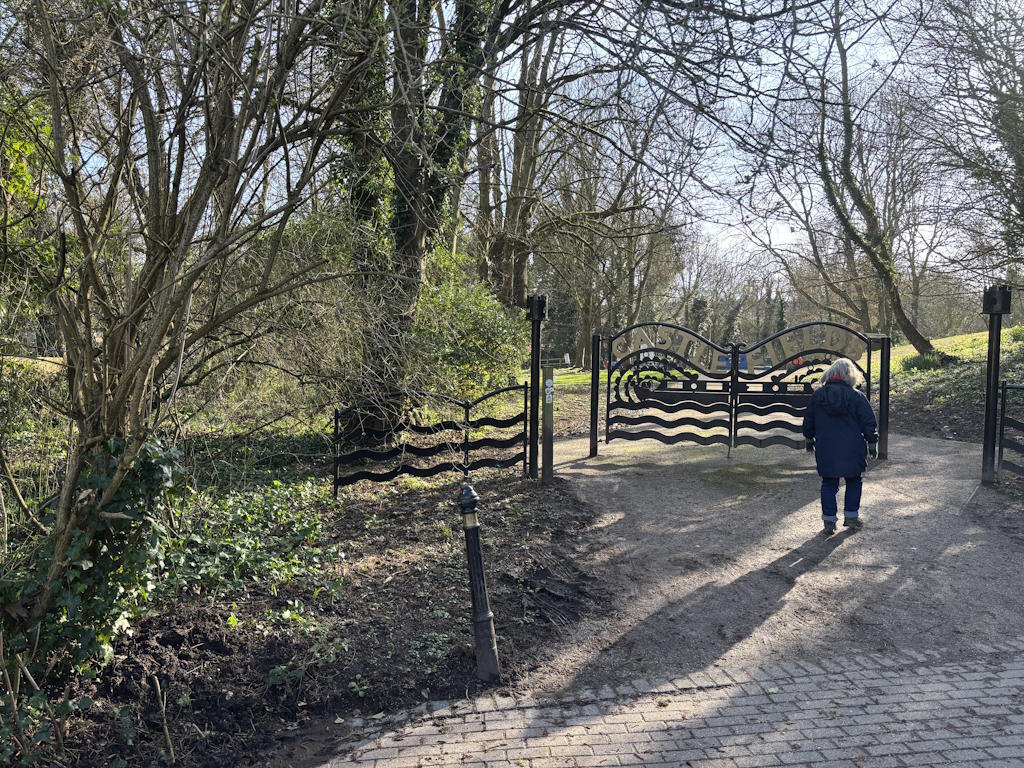
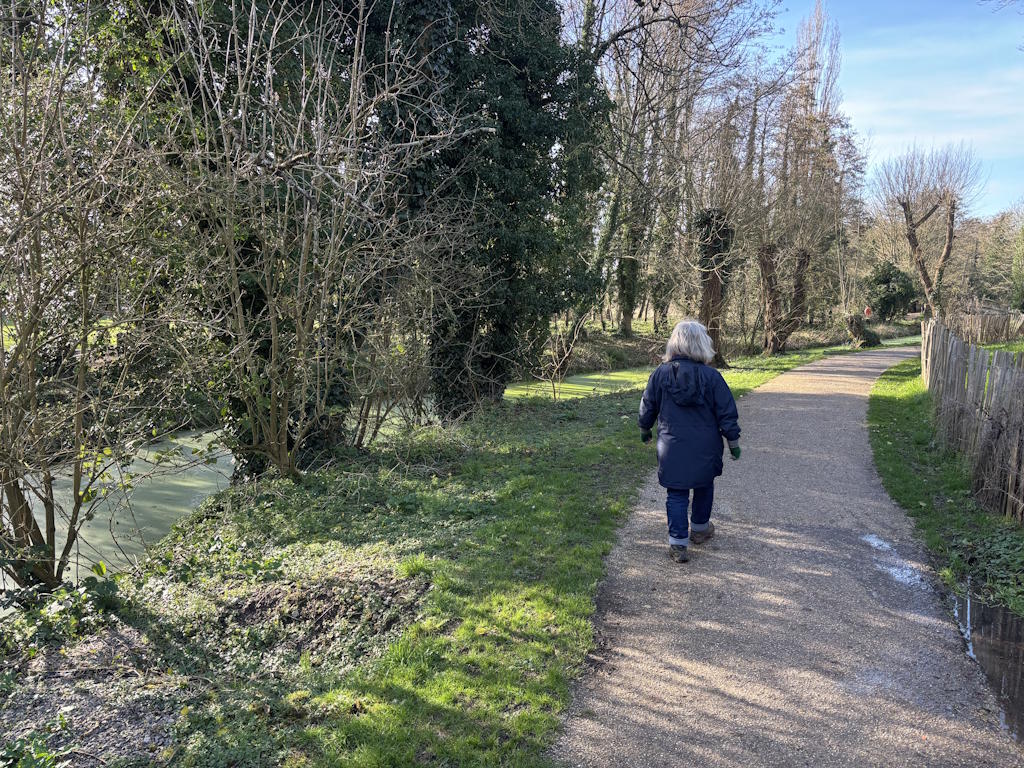
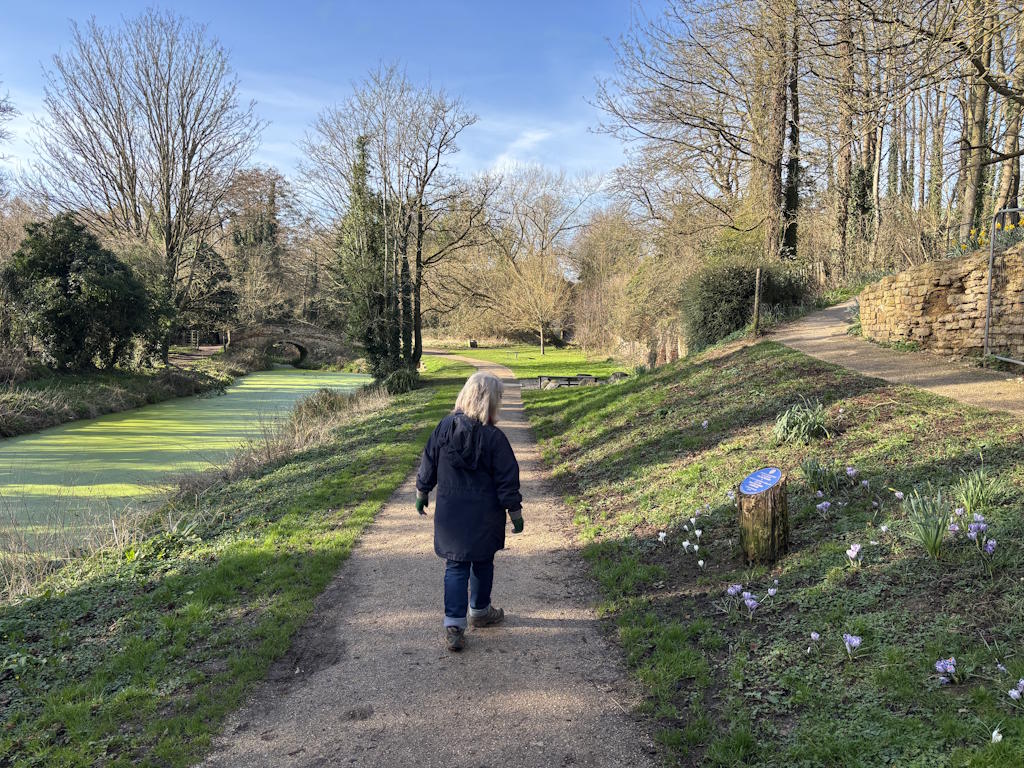
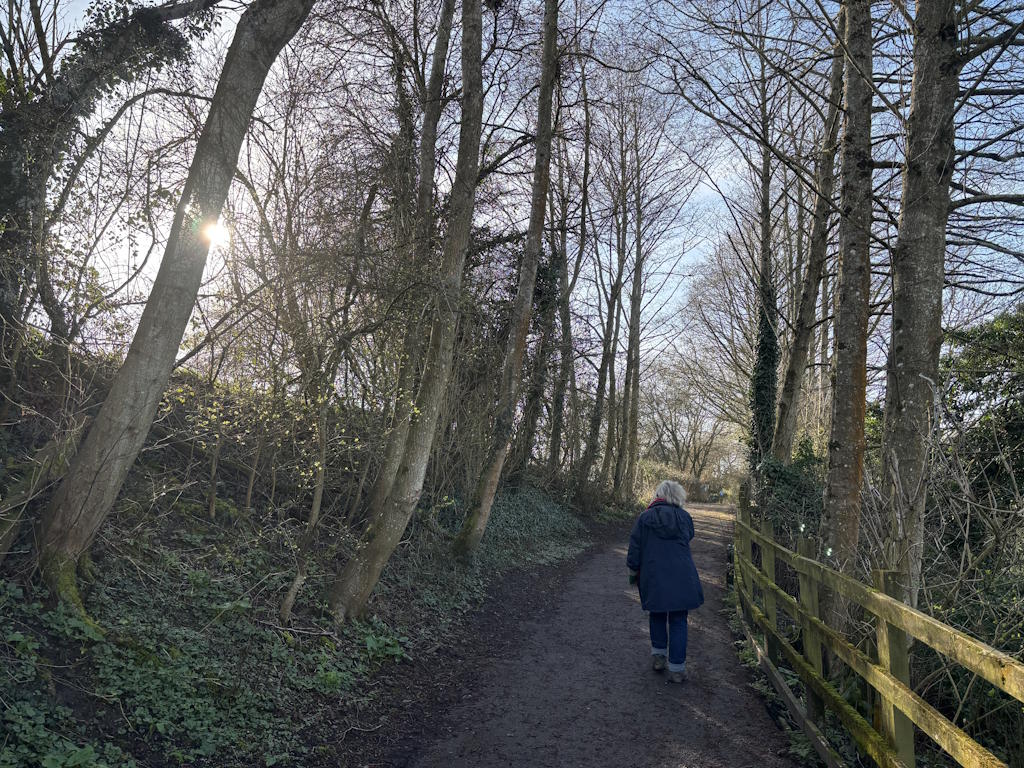
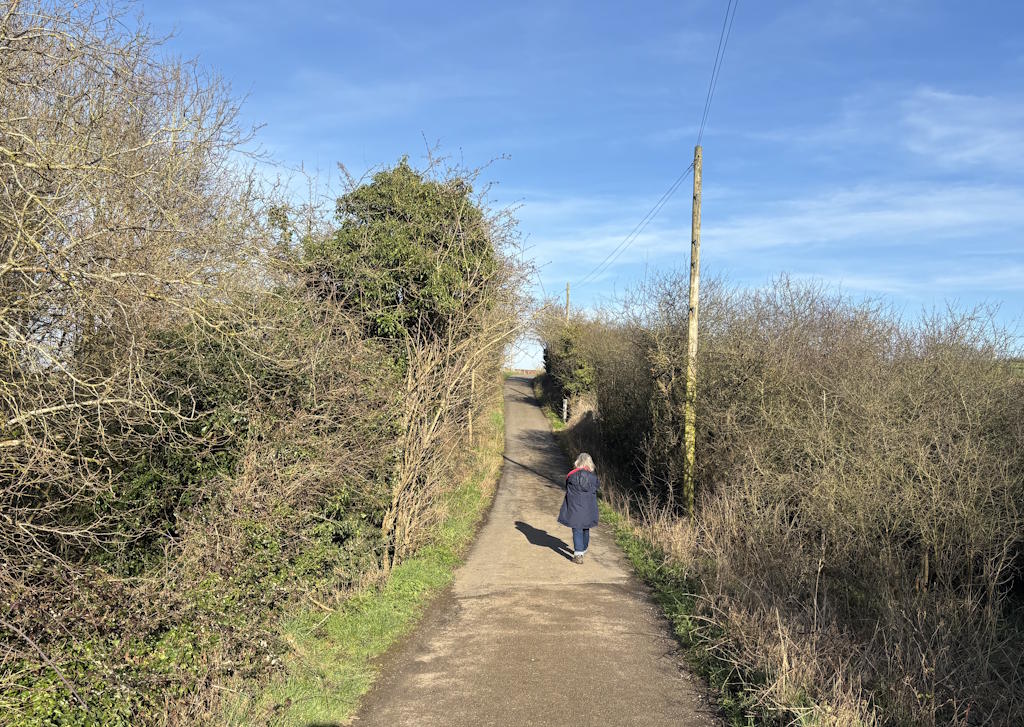
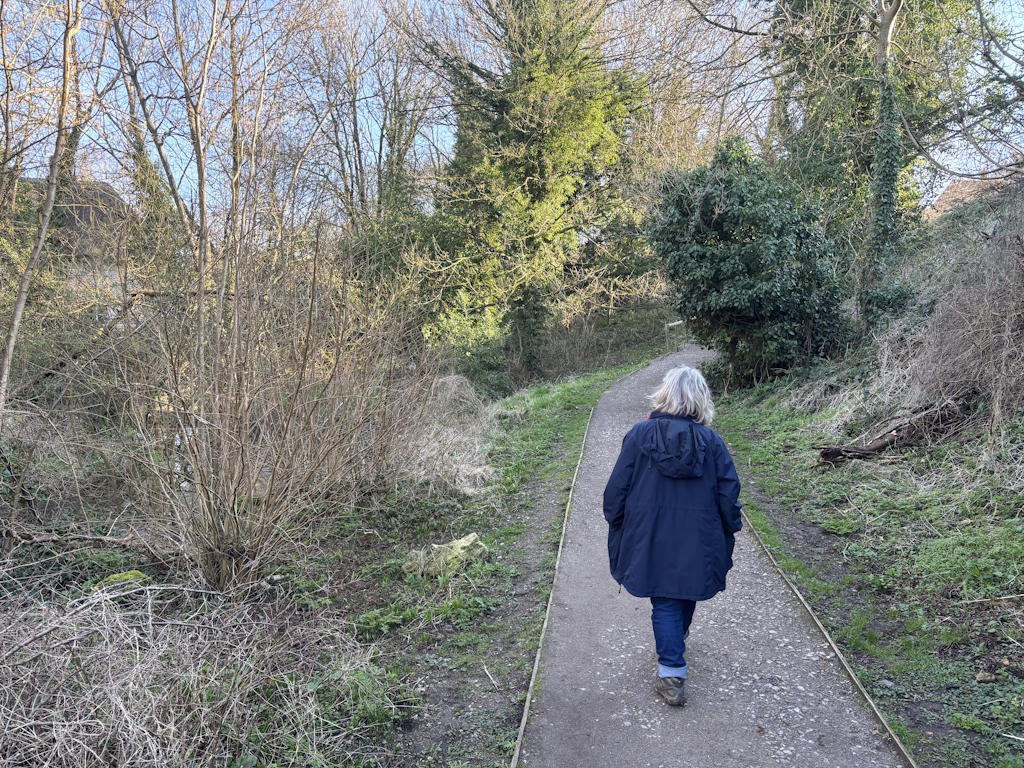
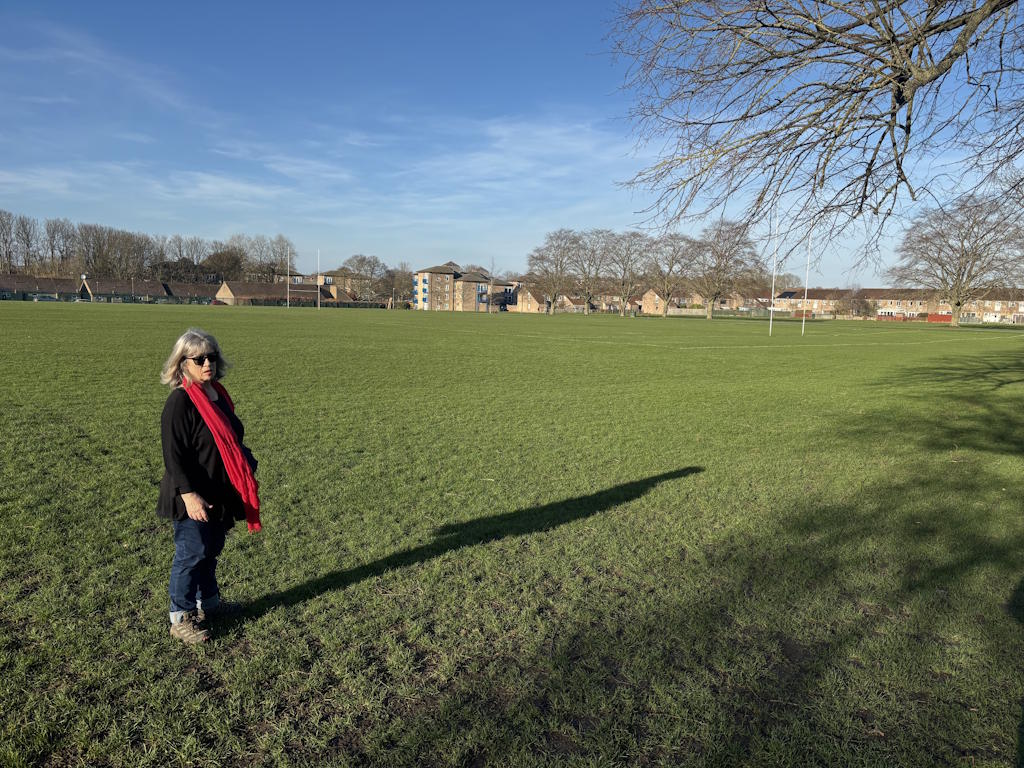
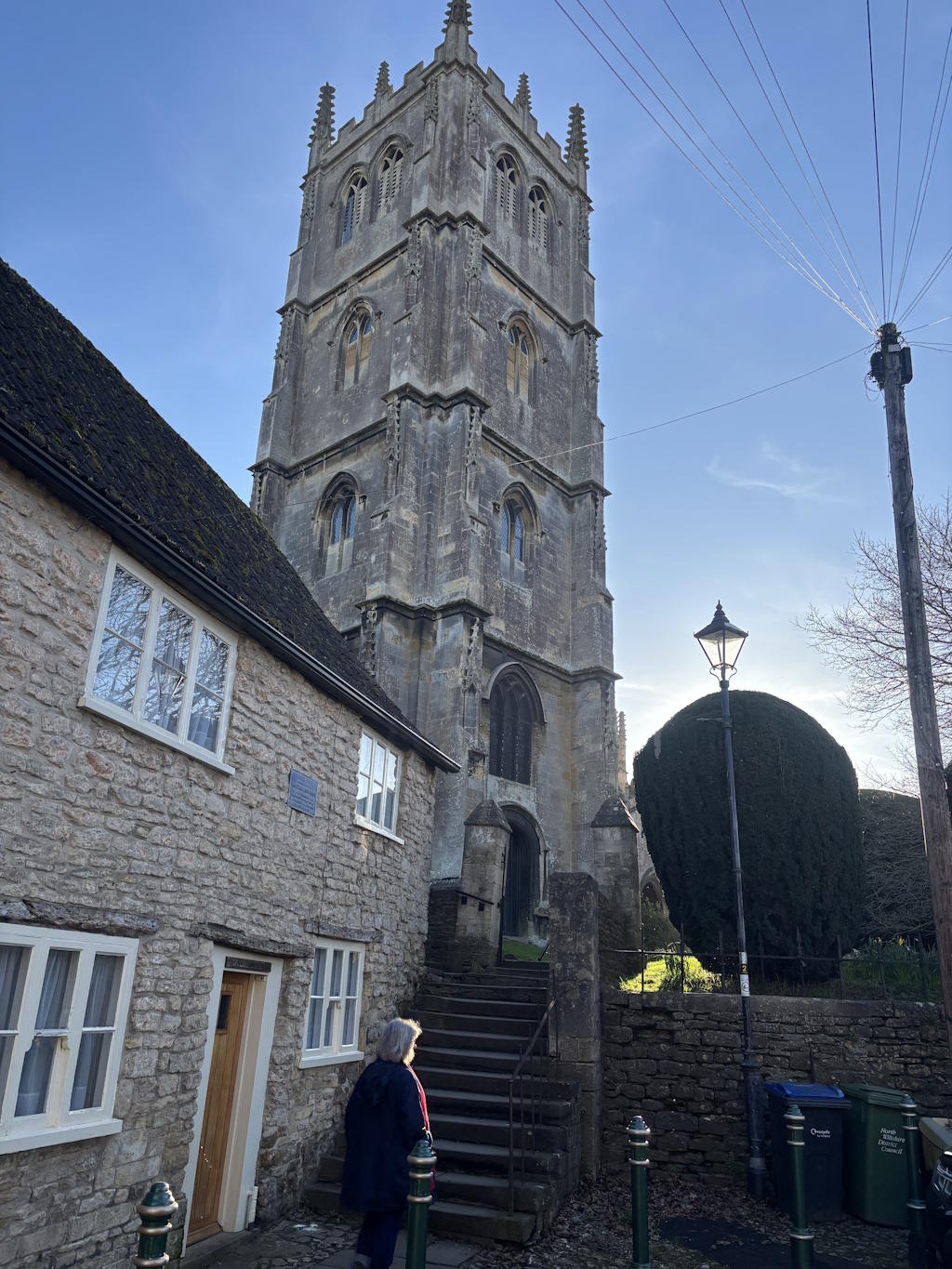
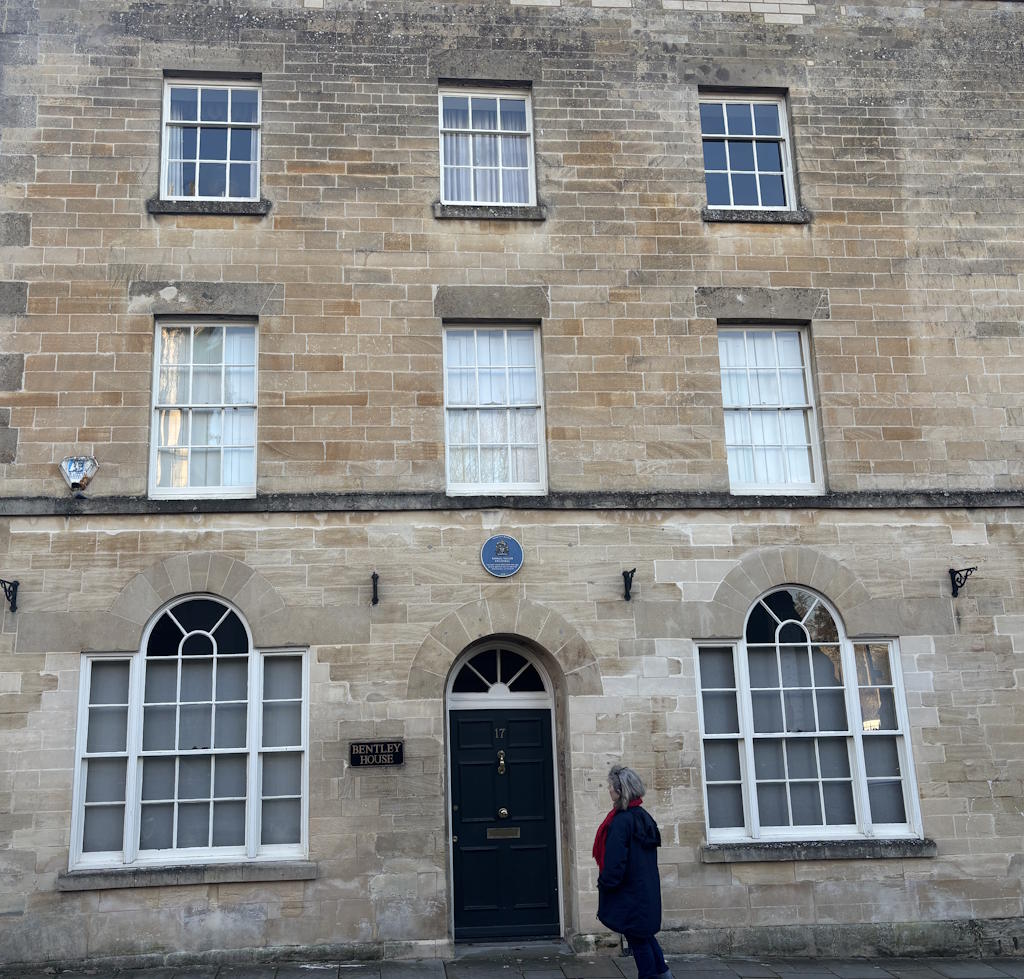
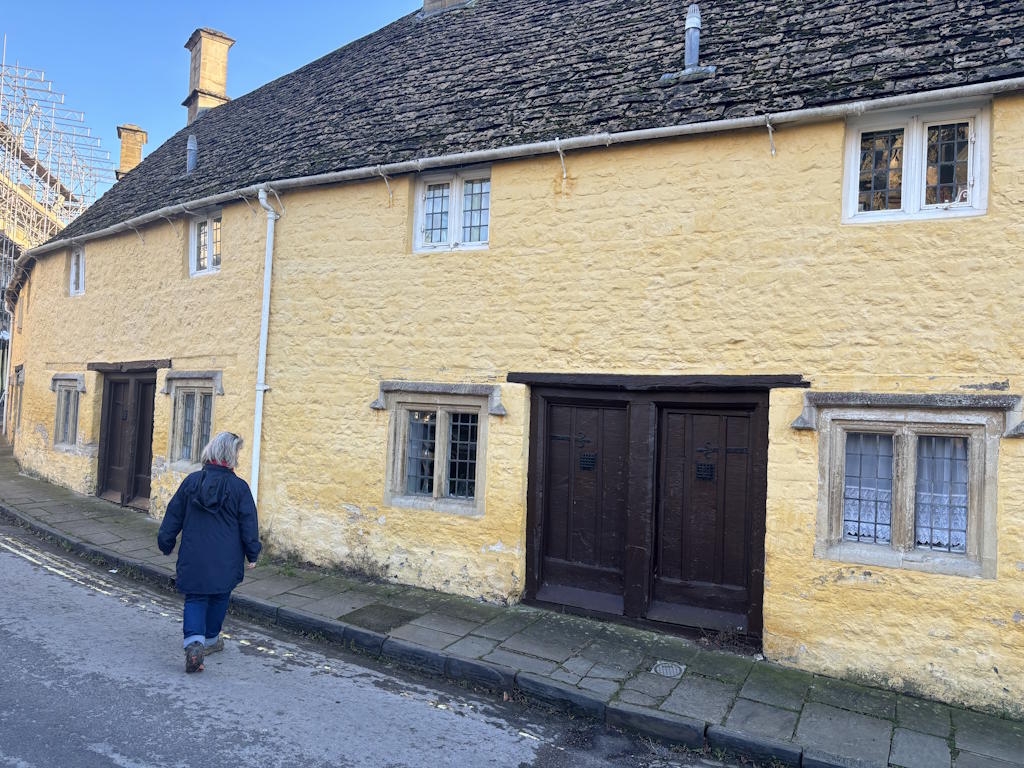
The walk is straightforward – no significant incline, no stiles, a small amount of field working from point 3 to 4 for which you really just follow the fencing round as shown. There is a little bit of traffic after point 6 but no blind corners. Generally the road parts of the walk are short and very quiet. The final section encourages you to wander round The Green and Church Street – where most of the buildings of interest are gathered.
The town
Calne is an attractive Wiltshire town with an interesting history. The walk starts in the centre which is busy – the A4 runs through the middle of it after all – although this walk is pleasantly on the edge of any of that bustle. Note the Carnegie Library which you walk past at the start of this walk (now a Heritage Centre). Also the impressive Georgian Lansdowne Arms Inn and Tounson’s Almshouses of 1682. There is a fine church at St Marys – note the striking stained glass windows in the North Transept. They commemorate sons of the Lansdowne family (Bowood House) that were killed in the Great War.
Cloth
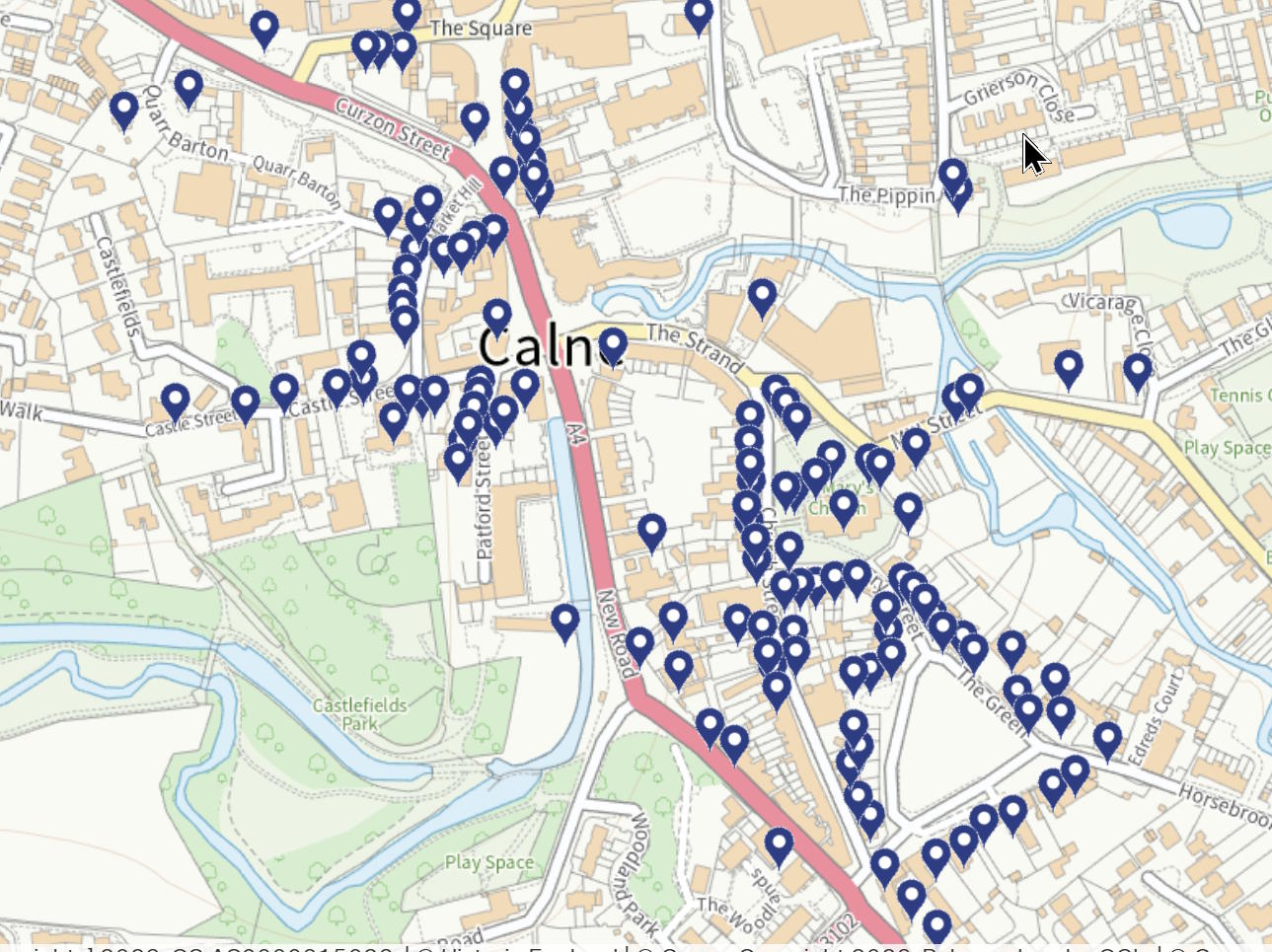
The wealth that is still evident in the various town houses came from its weaving industry – thanks to the River Malden and the mills that it supported. Sadly, clothmaking was outrun in the town by Northern steam powered mills and by some migration of the industry to nearby Trowbridge. The houses around The Green and along Castle Street are a reminder of the once flourishing clothing trade. This map shows the density of listed buildings in the town.
Pigs and trains
However, the town was revived in the nineteenth century by the growth of the bacon trade as pioneered by the Harris family. Calne was on a droving route that stretched from Bristol to Smithfield Market in London. Pigs arrived at Bristol from Ireland. On the journey to London they were rested overnight every 10 miles or so – one was at Black Dog near Cane. Harris purchased pigs there that were unlikely to survive on the full route. From this he built up a significant business in bacon and pork pies.
Although Harris used the canal to get his products moved, he led an effort to get the railway to Calne (it had been missed out on the London to Bristol line). Although the canal operators objected, the GWR did build a link from Calne to Chippenham and on this walk you travel upon the old route between points 2 and 3 on the map. The first train ran in 1863. It remained prosperous because of the Harris works but also because of nearby military bases. However, when those closed after the war the line could not survive and it close in 1963. More on the railway is described in this video link.
Famous residents
St Dunstan is probably the first. He is commemorated by various buidings in the town perhaps because he is the subject of a supposed miracle that happened there in 978. He was part of a meeting in a hall of which the upper floor collapsed – during a lively debate on whether priests should be celibate. Dunstan, who was losing the argument, maintaining that they should, but he survived the disaster by standing on the only beam that didn’t collapse with the floor.
Samuel Taylor Coleridge lived on Church Street between 1814 and 1816. Whilst in Calne, he wrote his “Biographia Literaria” setting out his ideas. He also prepared for publication his opiate inspired poem “Kubla Khan” and his Gothic Ballad “Christabel”. He also worked on his most famous poem, “The Rhyme of the Ancient Mariner”.
J.B. Priestly – From 1773 to 1780, Priestley lived at Bowood House as librarian and intellectual companion to William Petty, 2nd Earl of Shelburne (later Prime Minister). Bowood was a major Enlightenment centre at the time, attracting thinkers and scientists. While working there he isolated oxygen – for which he is justly famous. He lived for a period on the The Green with his wife and three children. They then moved to what is now The Old Vicarage on Anchor Road.